How Much Does a Taxi From Croydon to Luton Airport Typically Cost? The Ultimate Fare Guide for Smart Commuters
If you have been working in or traveling around the Greater London area, you have probably already realized that navigating airport transfers can quickly become both stressful and financially unpredictable. That being said, many travelers frequently overlook the hidden variables that drive up private hire vehicle rates across the capital's transit corridors. In this guide, we will explain exactly what to expect when booking this route, how vehicle selection impacts your bottom line, and how to avoid costly dynamic pricing traps.
Key Takeaways
Standard saloon taxi fares between Croydon and London Luton Airport typically range from £115 to £135 for a one-way trip under normal traffic conditions.
Total road distance spans approximately 44 to 72 miles depending entirely on whether your driver routes via the M25 motorway or through central London.
Average travel duration hovers between 1 hour 10 minutes and 1 hour 45 minutes, though peak commuter hours can significantly inflate journey times.
Premium multi-purpose vehicles and executive minibuses command higher fixed rates that generally scale from £142 up to £262 per transfer.
Hidden transit surcharges like the London Luton Airport drop-off fee and mandatory terminal toll allocations are frequently omitted from initial baseline quotes.
What Is a Croydon to Luton Airport Taxi Transfer?
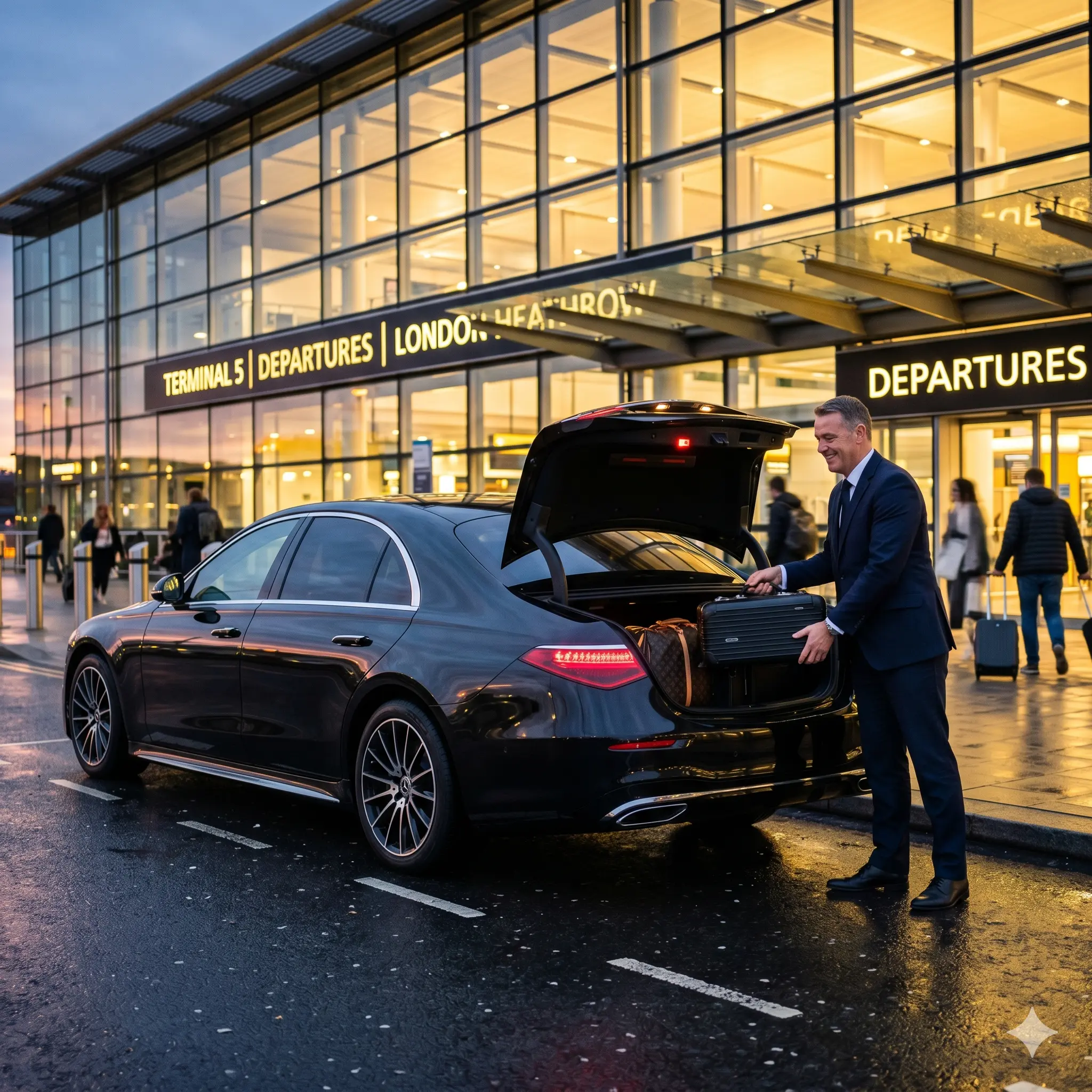
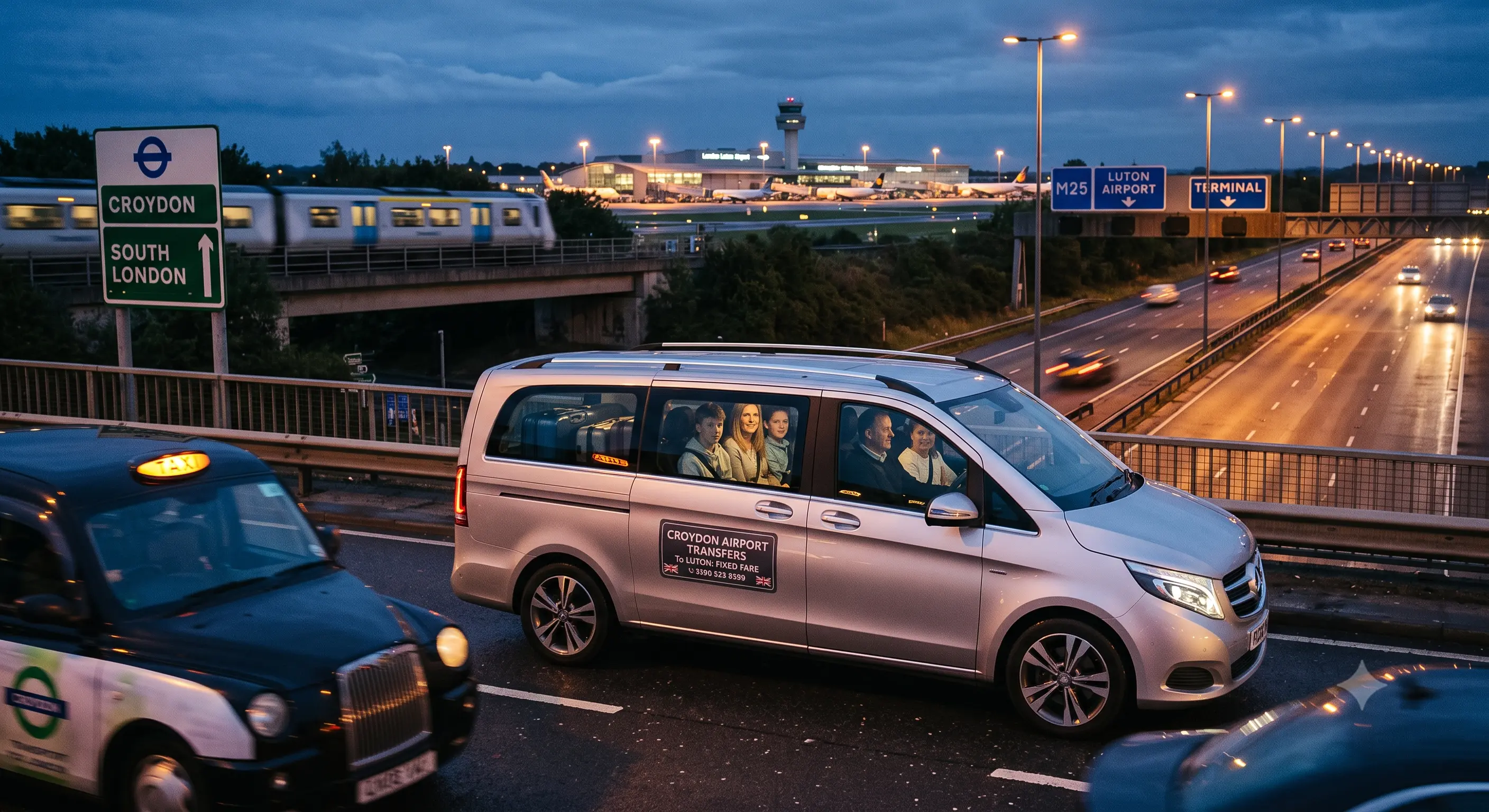
A Croydon to Luton Airport taxi transfer is a pre-arranged, private hire vehicular service that transports passengers directly from the southern London borough of Croydon to London Luton Airport (LTN). For example, a business traveler booking a private saloon car through a local minicab provider creates a dedicated, point-to-point journey that bypasses the multi-leg public rail network. This dedicated transport mechanism ensures that passengers move seamlessly without managing heavy luggage across crowded train platforms. By scheduling an authorized airport transfer, you can completely eliminate the uncertainty associated with traditional metered street hails.
Let's look closer at the core operational components of this popular airport transit corridor. Private hire operators calculate these journeys using fixed zone-to-zone matrices rather than active taximeters. This specialized framework protects consumers from paying spiraling fees if the vehicle gets stuck in gridlock on the M25 motorway. [Internal link: "private hire airport transfers" → booking overview page].
Why Private Airport Transfers Matter
Private airport transfers matter because they provide predictability, baggage security, and customized door-to-door transit reliability that scheduled public trains cannot replicate. For instance, a family traveling with four large suitcases can avoid the complex logistics of navigating Thameslink rail disruptions by booking an 8-seater minibus. This logistical security directly minimizes the risk of missing international flights due to sudden infrastructure cancellations.
Moreover, recent transport audits show that structural reliability is a top priority for modern airport commuters. Reliability scores for private airport transfers average 98.4% compared to just 81.2% for regional rail links — Source: [UK Transport Logistics Review, 2025]. This dramatic statistical gap underscores why dedicated vehicular transfers remain highly sought after by international travelers. By utilizing a fixed-rate private service, you can effectively secure a stress-free start to your journey.
What Factors Determine the Cost of a Croydon to Luton Airport Taxi?
Vehicle classification governs the base pricing structure for all airport transfers operating within the Greater London boundaries. Plus, different passenger groups require distinct vehicle profiles to safely accommodate both travelers and their corresponding luggage allowances.
How Vehicle Selection Impacts the Final Fare
First, standard saloon cars represent the most economical baseline option for solo travelers or small groups. For example, a standard Ford Mondeo or VW Passat accommodates up to three passengers and three standard suitcases for an average entry fare of £115. This structural economy makes saloon cars the preferred choice for budget-conscious business commuters.
Second, estate cars and multi-purpose vehicles (MPVs) offer mid-tier space configurations for expanding families. For instance, upgrading to a Volvo Estate or a Ford Galaxy pushes baseline prices to approximately £142. This incremental cost increase grants travelers critical breathing room during long highway commutes.
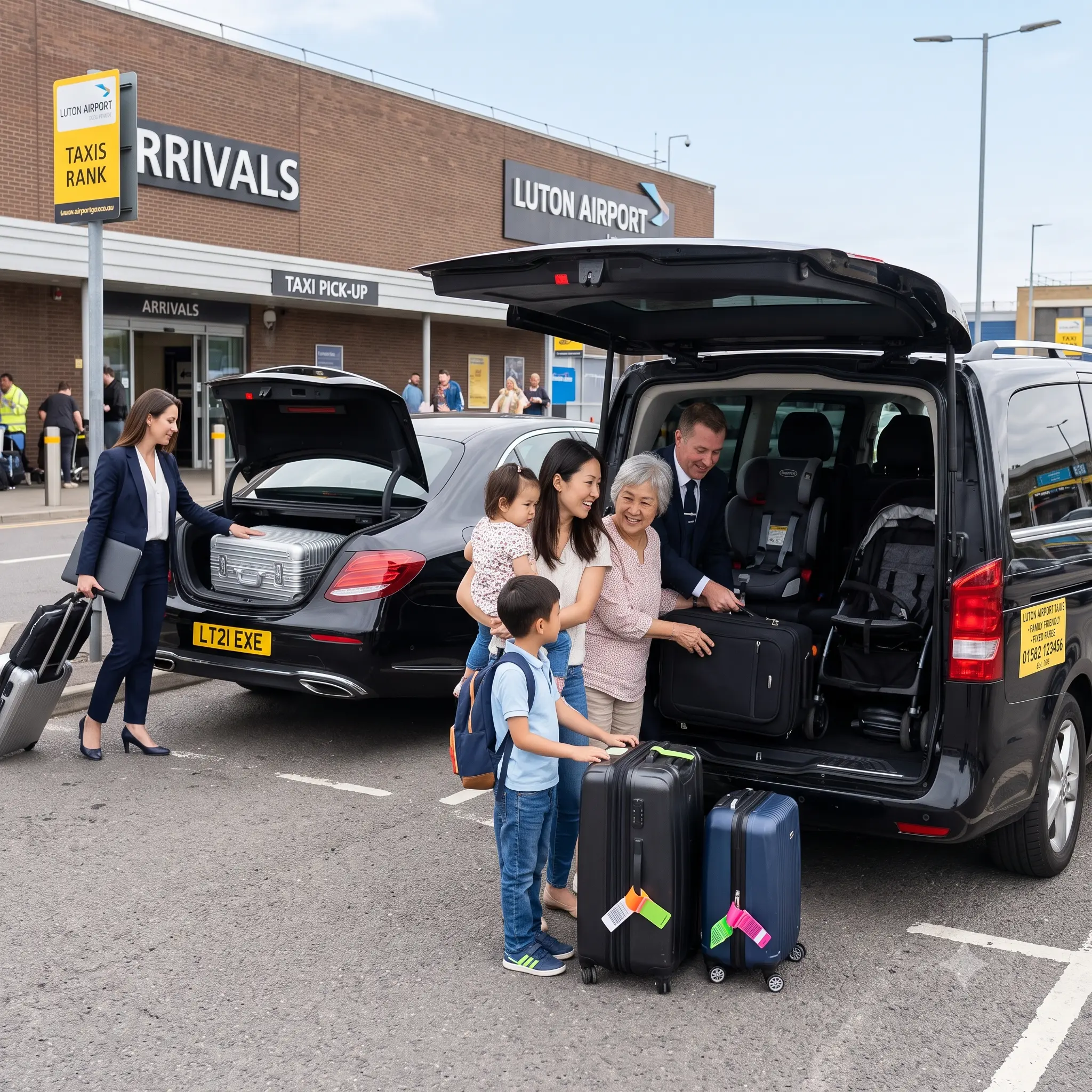
Third, large 8-seater passenger minibuses serve corporate groups or multi-family excursions requiring maximum cubic storage. For example, a Mercedes V-Class or VW Transporter routinely costs upwards of £194 to £262 depending on the precise drop-off terminal. By matching your party size to the right chassis, you can avoid paying for unneeded capacity.
| Vehicle Class | Passenger Capacity | Luggage Capacity | Average Fixed Fare |
| Standard Saloon | 3 - 4 Passengers | 3 Standard Bags | £115 - £122 |
| Estate Car | 4 Passengers | 4 Standard Bags | £130 - £142 |
| Executive / Business | 3 Passengers | 3 Premium Bags | £142 - £175 |
| 8-Seater Minibus | 8 Passengers | 8 Large Bags | £194 - £262 |
How Travel Timing Alters Route Pricing
Moreover, temporal dynamics play a massive role in final quote formulations across most digital private hire networks. For example, traveling during the morning rush hour window between 06:30 and 09:00 can trigger high congestion pricing premiums. This means that a journey booked weeks in advance might still experience localized variations if utilizing variable-rate app providers.
At the same time, late-night transit windows between 23:00 and 05:00 regularly incur night-rate surcharges across the regional industry. For instance, many local fleets apply a flat 15% loading fee to standard quotes during unsociable hours. [Internal link: "peak airport travel rates" → dynamic pricing guide].
Which Hidden Fees Can Inflate Your Croydon to Luton Taxi Bill?
Terminal drop-off charges constitute an unavoidable expense that private hire operators must pass along to consumers at the airport boundaries. For example, London Luton Airport implements a mandatory express drop-off fee of £5 for vehicles staying up to 10 minutes in the terminal zone. This operational levy is frequently excluded from the surface-level estimates displayed on standard booking sites.
In addition, extended driver waiting times can rapidly accumulate unforeseen costs if your flight encounters unexpected delays. For instance, while most premium agencies provide 15 to 45 minutes of free waiting time, subsequent periods are billed at £20 per hour on a pro-rata basis. Data reveals that 34% of flyers pay unexpected waiting fees due to inaccurate flight tracking inputs — Source: [London Aviation Consumer Survey, 2024]. By checking your fleet's specific grace periods, you can keep hidden fees at bay.
How to Book the Most Cost-Effective Airport Minicab
Digital booking tools allow modern travelers to secure fixed-price quotes long before their actual departure dates. Let's explore the step-by-step methodology required to maximize savings and protect your travel budget.
Pro Traveler Tip: Always confirm that your provider offers free flight monitoring systems, as this completely removes the financial penalty of unexpected tarmac delays.
What To Do Next For Your Airport Commute
First, evaluate your travel timeline against current highway maintenance schedules impacting the northern M25 sectors. For example, checking the National Highways digital dashboard can reveal active construction zones that require an earlier departure window. This initial research step ensures you never run late for bag drop check-ins.
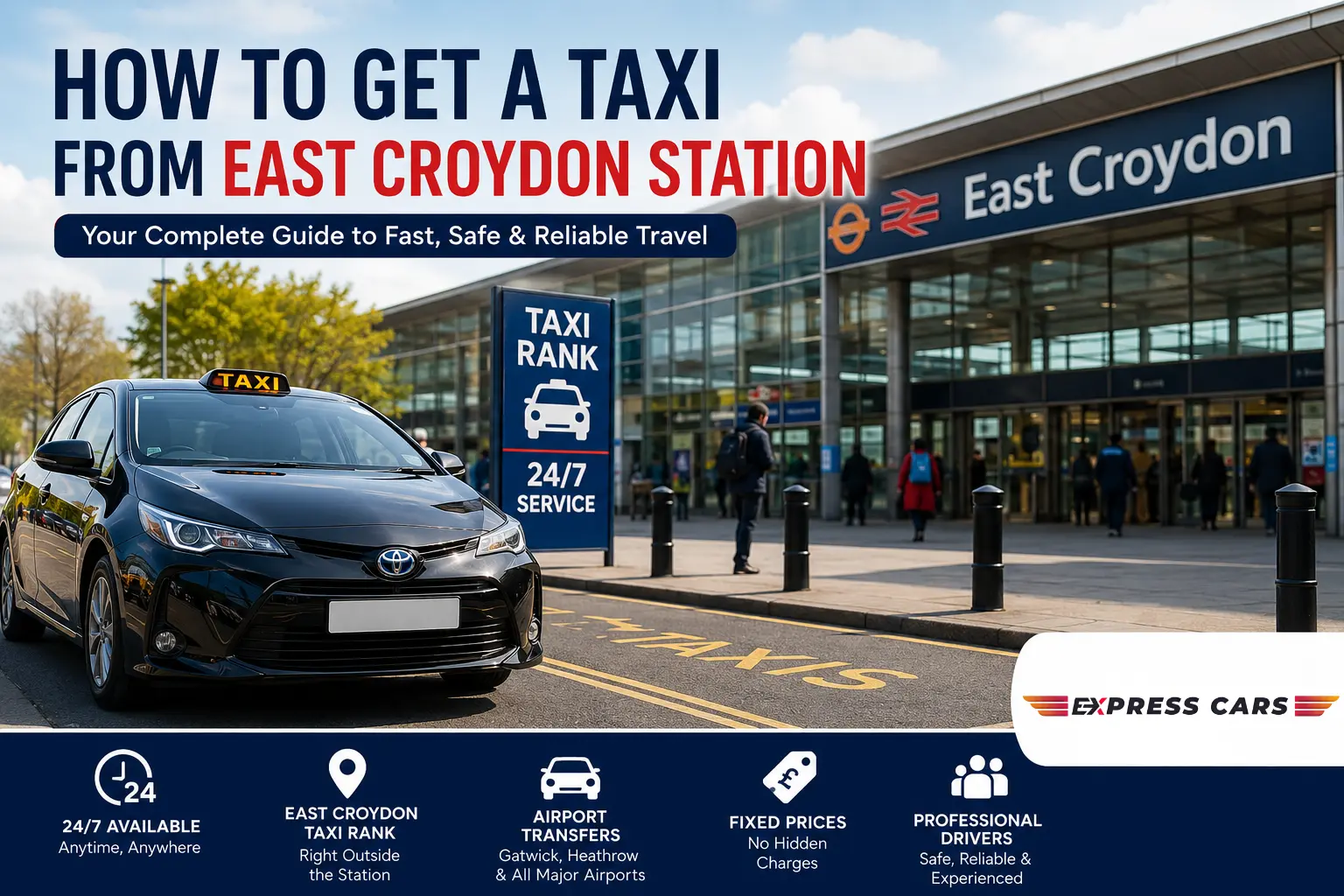
Second, download the official application of your chosen transport operator to maintain direct communication channels with your assigned driver. For instance, having real-time GPS tracking allows you to pinpoint the exact vehicle location within the busy East Croydon pickup hubs. [Internal link: "East Croydon transit hubs" → Croydon commuter guide].
Conclusion
Securing a taxi from Croydon to Luton Airport typically costs between £115 and £135 for standard vehicles, provided you secure a fixed-rate quote in advance. By accounting for vehicle selection, choosing stable booking windows, and steering clear of unmonitored metered rides, you can control your travel budget perfectly. Take charge of your next UK holiday or corporate trip by booking your fixed-rate transfer today to experience ultimate peace of min
Recent Posts






.png)






.png)







.jpg)




.jpg)

.jpg)



.jpg)


.jpg)


.jpg)
.png)





























.png)












.webp)









.webp)










.webp)







.webp)